how interior designers can confidently incorporate art so there’s no need to defend it later
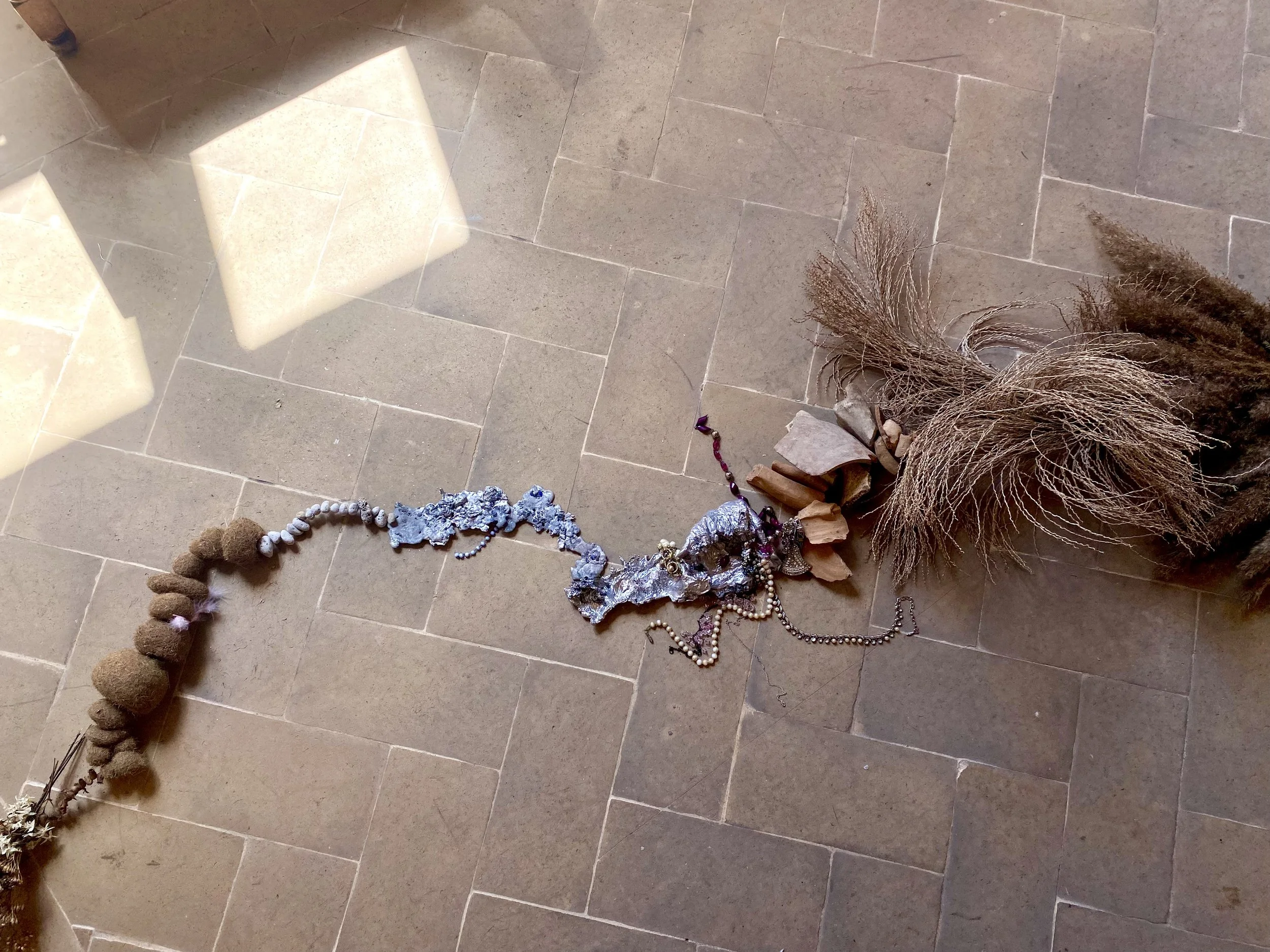
Sister (Serpentessa), detail, 2024 by Chiara Camoni : stoneware glazed with vegetal ash, polychrome terracotta, mixed media, about 150 m
I often hear designers say, “I just don’t want the art to throw everything off.”
But it’s not really about the art… what they’re really feeling is fear that all the time and energy (+ love!) poured into the design won’t be honored when it comes time to bring artwork in (…which requires a lot of trust in the process).
This is really the heart of it: art brought in at the end can feel rushed, purely decorative, or even slightly disconnected - like a patch on top - instead of a thread woven through from the beginning.
In contrast, when the right piece is introduced thoughtfully, it completes the narrative - with the power to deepen the emotions of the space in a way that feels natural, as if it was always meant to be there.
In this article, I’m exploring how material, scale, and concept become anchors - and how a work like Sister, Serpentessa (2024) by Chiara Camoni demonstrates the difference between something feeling slightly off… and the power of art to quietly ground a space.
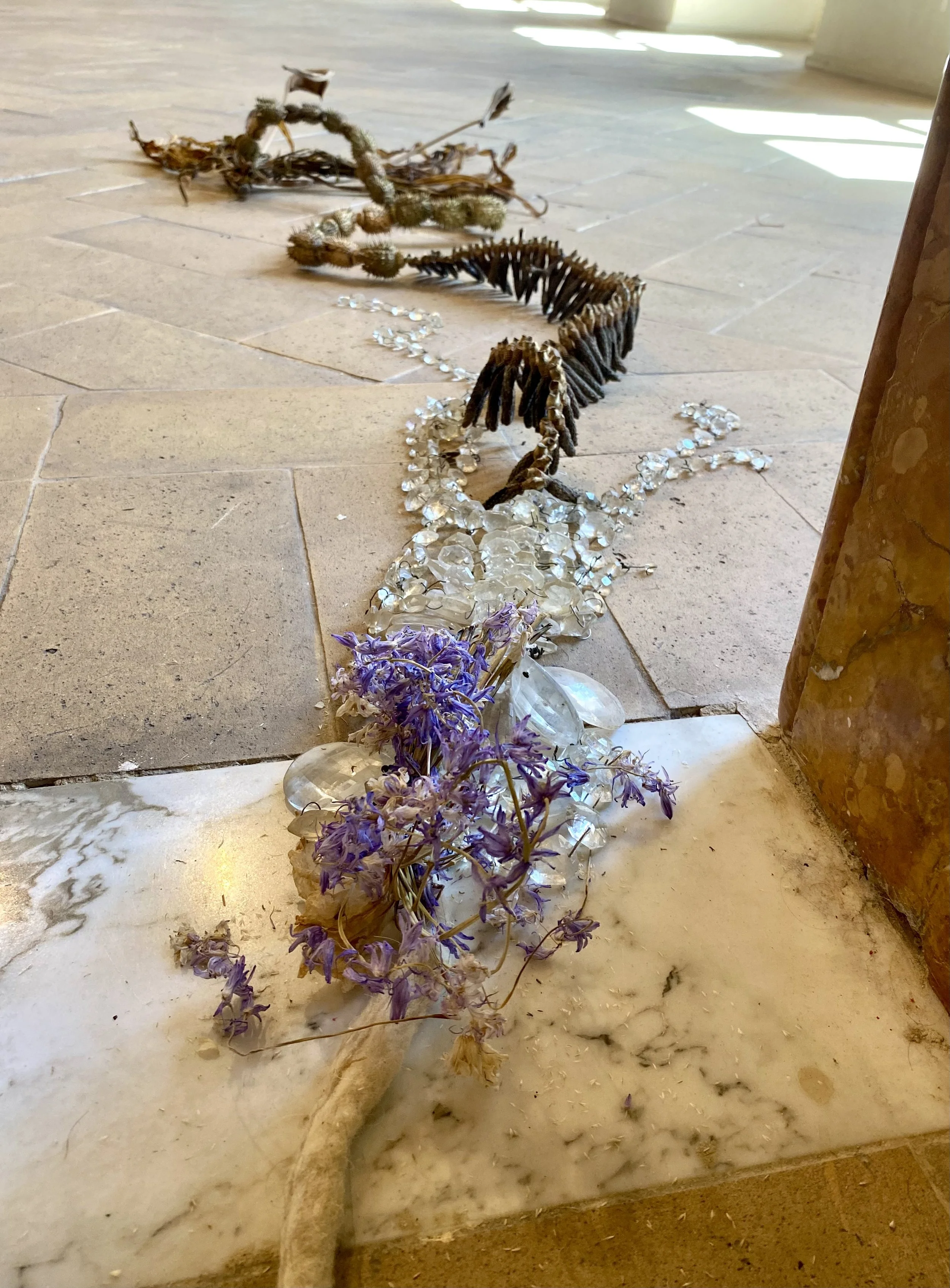
Sister (Serpentessa), detail, 2024 by Chiara Camoni : stoneware glazed with vegetal ash, polychrome terracotta, mixed media, about 150 m
In This Article:
Why art introduced late often makes the space feel slightly off
How art finds its place (with scale, placement, material, and concept)
How contemporary works anchor a space: proof from Sister (Serpentessa)
When art directs the experience (in commercial + residential spaces)
Big-picture insight: what it means to treat art as a main character
When Something Feels just slightly Off
When art is introduced too late, it sits on top of the design - not within it. And you can feel that separation. I’m reminded of this every time I notice a detail in a space that either feels disconnected ….or when a space simply works.
A few weeks ago, I went to a local Japanese restaurant with a friend. As soon as I stepped in, I was really in awe of how well-designed the whole place was. Super minimalist, yet warm and cozy, with floor-to-ceiling wood and thoughtful details: handmade ceramic teacups, heavy cotton napkins, tiny steel chopstick holders that felt like jewelry for the whole outfit.
Then, when it came time to order, the waitress said,
“Oh, you can just scan the QR code on your phone for the menu.”
Uggghh.
I wouldn’t say the whole experience fell apart. No, it was a tiny detail - efficient, even. But having to use the little glowing rectangle I work so hard to escape from - when it could have been one more aligned detail to complete the design…it shifted the feeling.
I think about art in a space the same way: it can either bring everything together or make it feel slightly….separate.
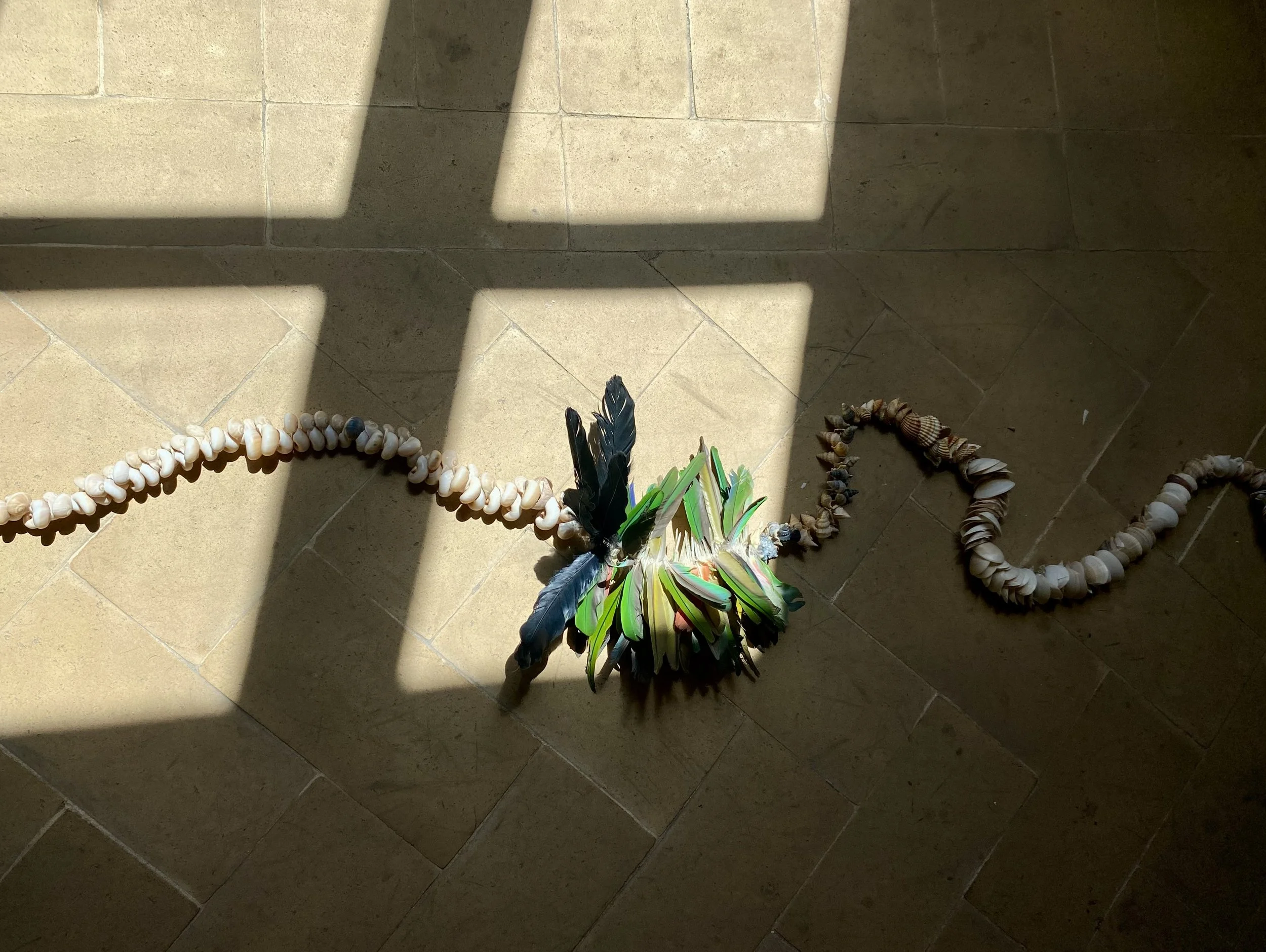
Sister (Serpentessa), detail, 2024 by Chiara Camoni : stoneware glazed with vegetal ash, polychrome terracotta, mixed media, about 150 m
4 WAYS ART FINDS ITS PLACE
To avoid art feeling like an afterthought, these are the key ways it can find its place (because small details in a space can make a big difference):
Scale: Sometimes going really large - or unexpectedly tiny - introduces a new sense of play. Don’t be afraid to experiment with scale.
Placement: Not just where it sits on the wall, but where it lives within the building. Is it tucked into a small corner, like a little secret? Or centered in a room, demanding attention?
Materials: They can also shift the feeling. Ceramics, wood, and textiles bring warmth. Metal, glass, and framed works feel more structured. Knowing how and when to mix them is the sweet spot.
Concept: There’s a story already being told in a space, so then the question becomes: where does the art fit into that story? …or…is it telling one of its own?
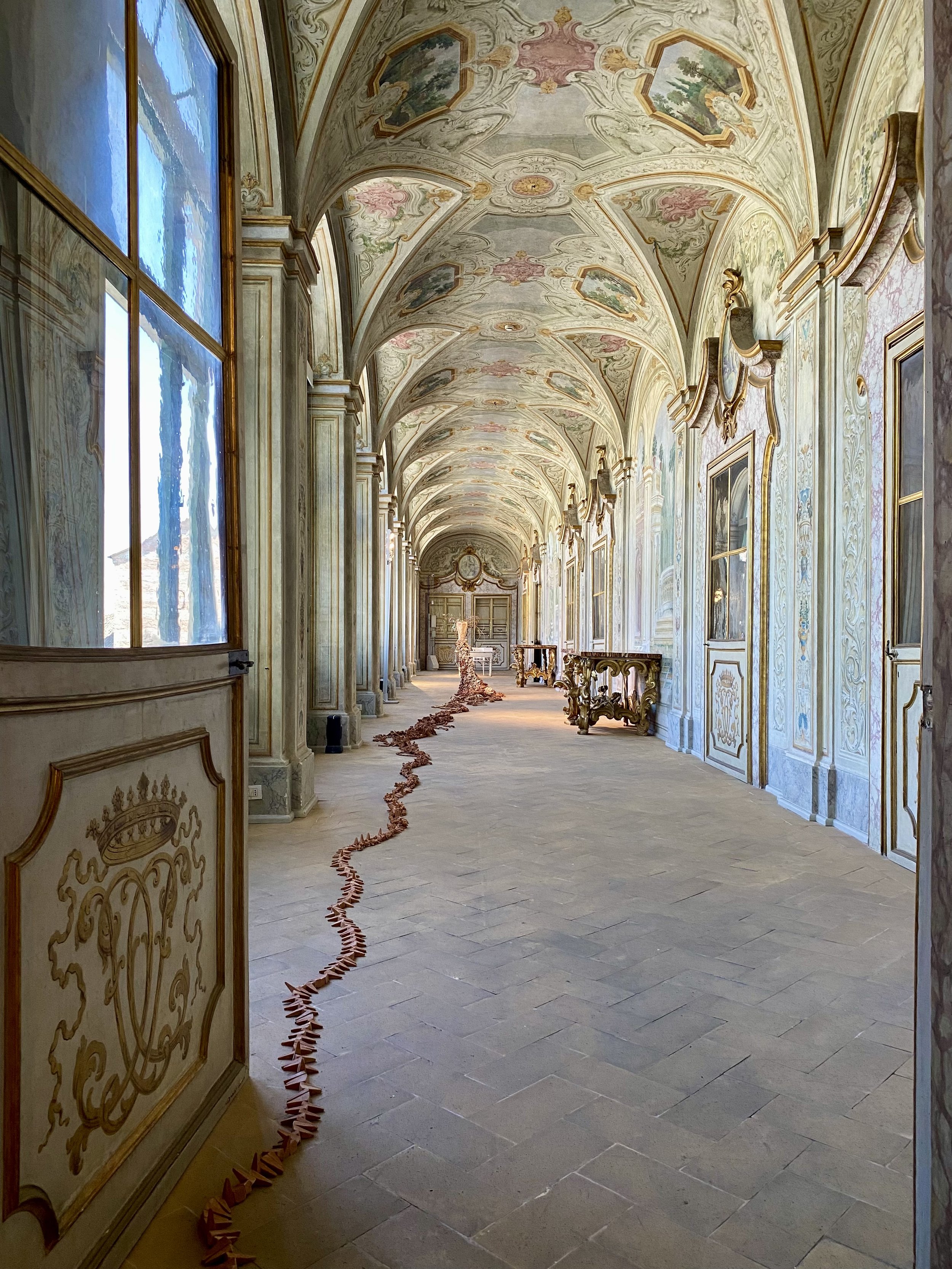
Sister (Serpentessa), detail, 2024 by Chiara Camoni : stoneware glazed with vegetal ash, polychrome terracotta, mixed media, about 150 m
SEEING IT IN ACTION: Sister (Serpentessa)
I walked through an exhibition that brought all of this to life in a way I hadn’t expected: Sister (Serpentessa) by Chiara Camoni. The work was presented at Palazzo Collicola in Spoleto, Italy in June 2024, as part of the exhibition Inizio fine. Rotondo. Tutte le cose del mondo.
Of course, Palazzo Collicola was not designed around this piece. It existed long before it arrived. And yet, the work didn’t feel simply added there - it felt in conversation with it.
What struck me most was how the piece (492 +/- feet long) led you through the entire space. I wanted to know more and more and more - to follow it wherever it took me. It was both leader and companion through all 12 rooms of the Palazzo, until discovering at the end, the vine-like piece was actually the tail of a snake with a woman’s bust…. sister herself.
The found objects (branches, feathers, etc) mixed with ceramics softened the ornate interiors, making it feel lived-in - not just curated - and showing how materials can truly transform a space.
I felt deeply connected to what the process must have been like for the artist - her quietly sourcing objects from the earth, assembling them with dedication, curiosity…. and a sense of something divine. That energy was present. And that’s what contemporary art brings into a space - a freshness that can’t be manufactured.
Architecture creates the container. Art fills it with meaning. Naturally, they belong in harmony.
The exhibition addressed exactly what I see clients worry about:
“It needs to feel like it belongs here.”
“I don’t want it to look like we added art at the end.”
“The art should unite the design - not fight it.”
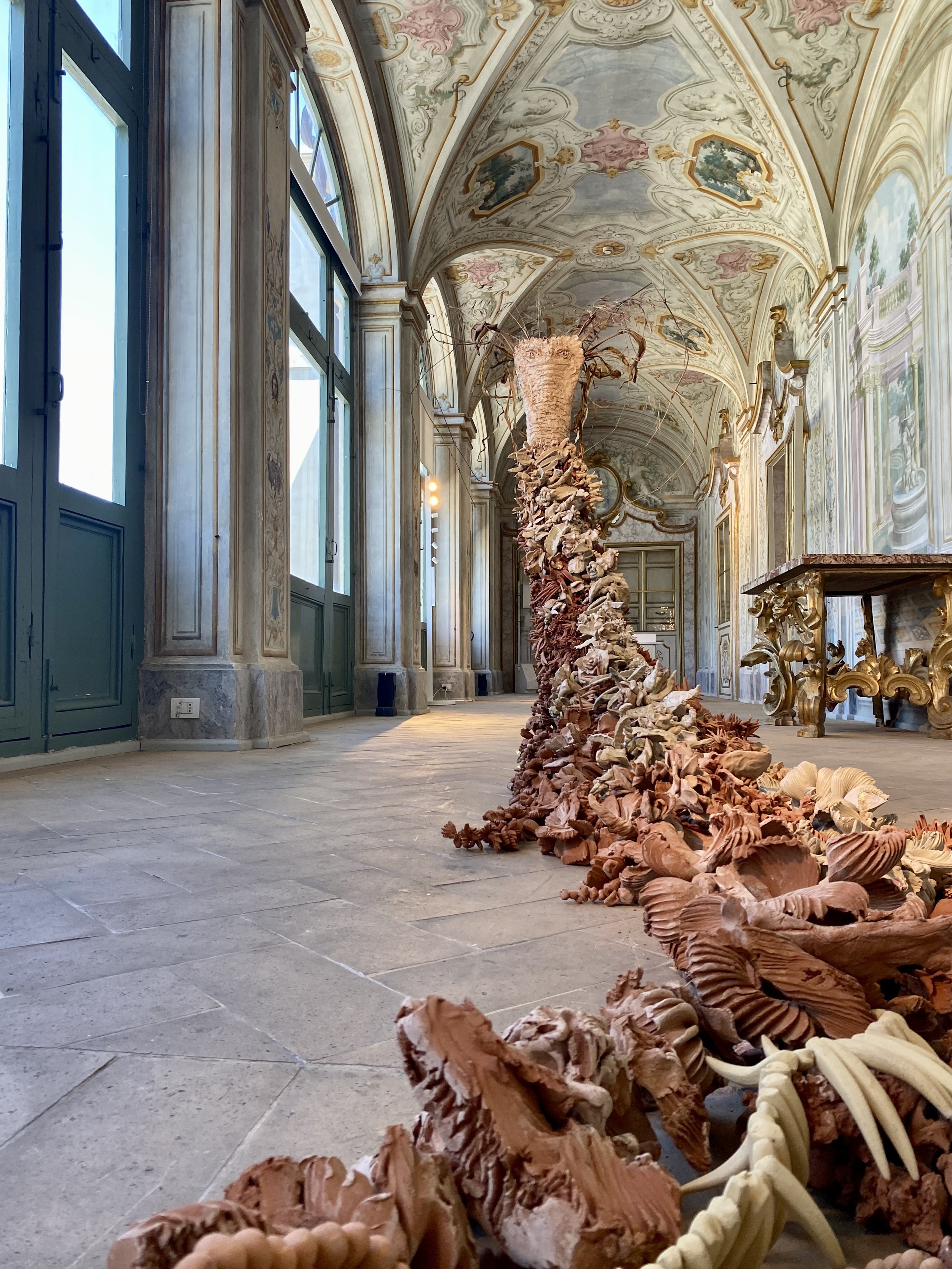
Sister (Serpentessa), 2024 by Chiara Camoni : stoneware glazed with vegetal ash, polychrome terracotta, mixed media, about 150 m
when art directs the experience
Obviously this was an art exhibition - but this way of thinking extends far beyond museum walls.
In restaurants, hospitals, and hotels, art can act as an engaging wayfinding source - rather than relying solely on lighting or signage. There’s always a more creative way to approach these moments, and this particular piece really sparked that for me.
Its placement on the ground opened up a different way of thinking about space - showing that guidance can be intuitive and curious, not simply instructional. We often gravitate toward walls, forgetting the entire canvas of the floor (or ceiling).
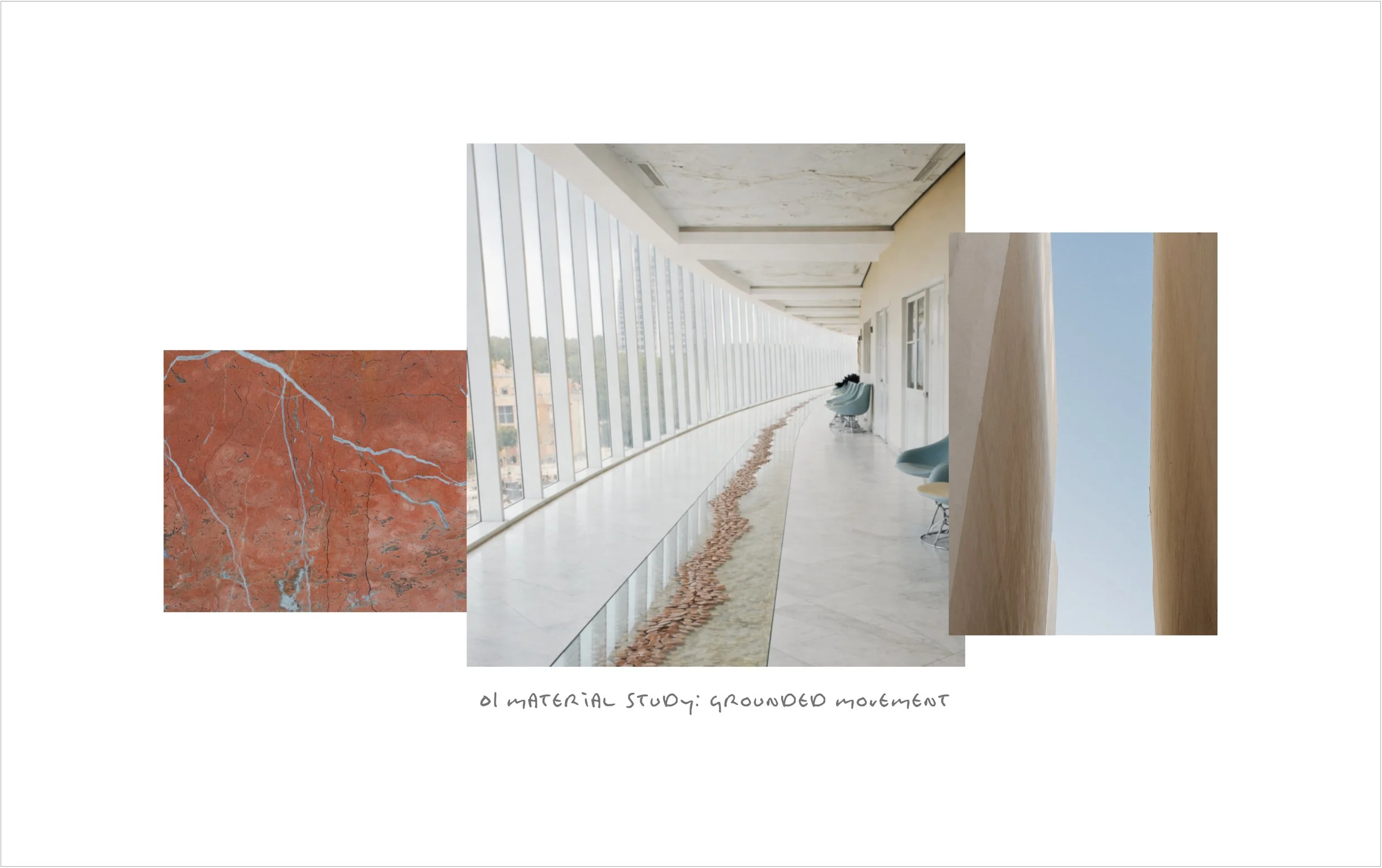
artful edit / 01 material study: grounded movement
art as a main character
Art behaves differently when it’s invited to lead.
Just like that QR code at the Japanese restaurant - a small detail that felt slightly out of place - art introduced at the end can feel the same - disconnected from the conversation, even if the piece itself is beautiful.
For a piece of art to complete a space means it’s doing the talking. No one has to explain or defend it. It simply makes sense - even to someone who isn’t “an art person.”
So…whether designing a hotel lobby or a private home, ask yourself:
“Is art the main character in the story we’re telling — or a last-minute invitation?”
Let me know in the comments what’s been most useful for you here.
Natalie Lytle
Contemporary Art Advisor / Artful Edit
View my bio