how interior designers finish a project strong - and still maintain creative energy for the next one
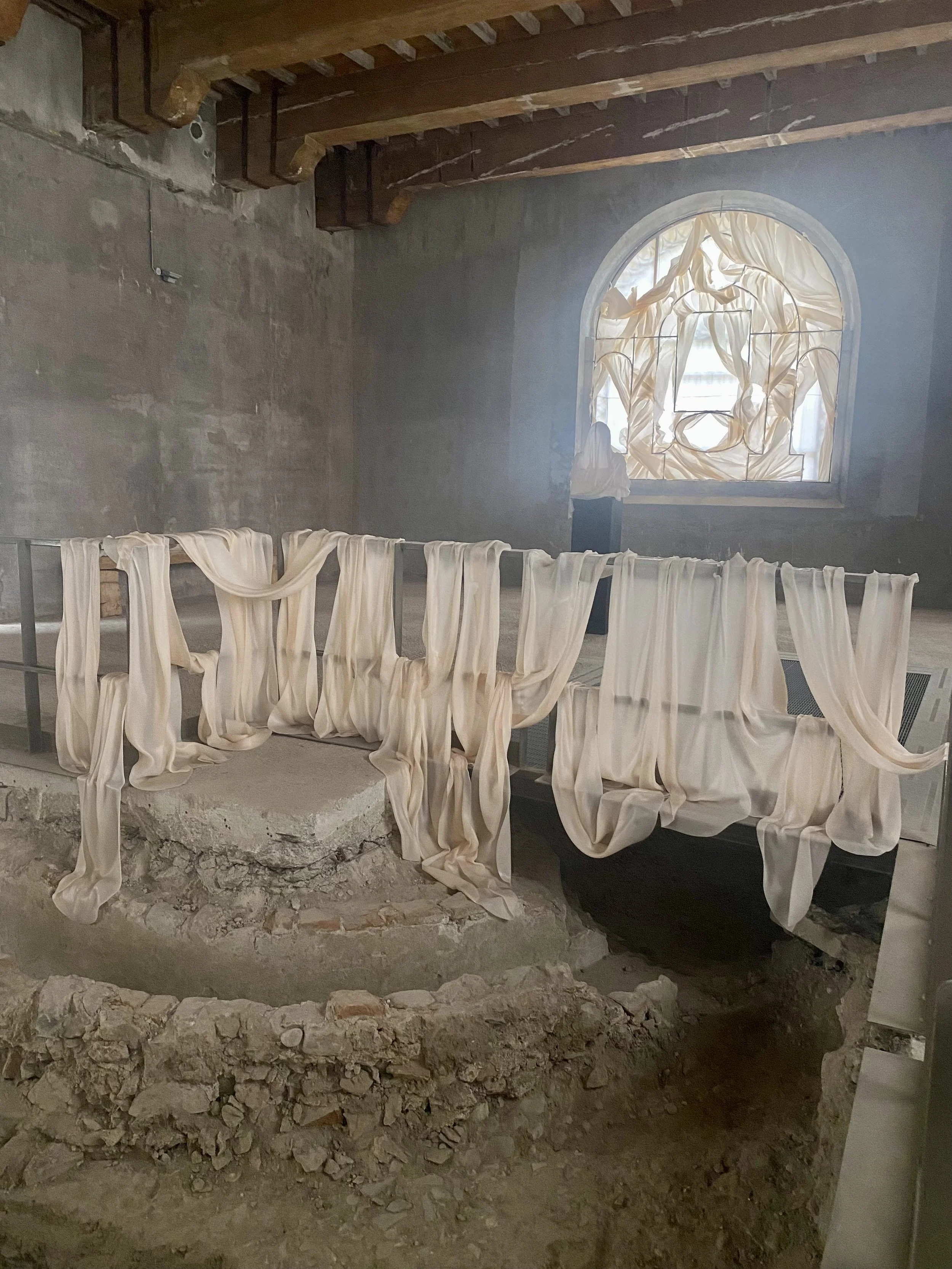
Breathe by Juliette Minchin at Rivelazioni at Museo S’ant Orsola, Florence, 2024
When I moved to Italy in 2021 to pursue a master’s in interior design, one of our first projects was reimagining the former convent of Sant’Orsola in Florence.
The project itself was exciting…especially as I found myself drawn to adaptive reuse…but not long after, I realized my real passion was where art meets design.
So when the convent finally opened three years later as a contemporary arts museum, I was eager to step inside a space I had only known through floor plans, historical texts, and rumors.
It definitely did not disappoint.
The exhibition at the time was Rivelazioni, featuring French sculptor Juliette Minchin and Italian artist Marta Roberti. The space was deep in renovation and almost fully raw. And then, against all the stone and dust, there was Minchin’s hand-sculpted wax - soft and feminine.
The contrast could have felt odd - but it didn’t.
From Minchin’s larger, architectural pieces to Roberti’s finely detailed drawings, moving through the exhibition felt like uncovering a series of secrets. Minchin carried her use of wax into the former apothecary, with these large “woven” wax panels with candles lit as the material dripped down slowly. It was quite surreal….almost medieval. Minchin said, “The melting of the wax is like a great hourglass that changes the state of the work. It is a way to let the material express itself, to let us feel the passage of time and the beauty of transformation.”
Roberti’s drawings, by contrast, were intimate and delicate. “…My technique somehow references frescoes because the never-uniform color gives the impression that it is fading like an ancient painting,” she explained. The effect was a layered texture that echoed the history of the convent itself, bridging past and present.
Despite the differences in scale and material, it didn’t feel competitive or forced. Actually, it felt complete. As if the art itself had woken the building that had been sleeping for over 40 years.
And that’s when I started thinking about something I see often in client projects: the difference between something being finished and something that truly feels whole.
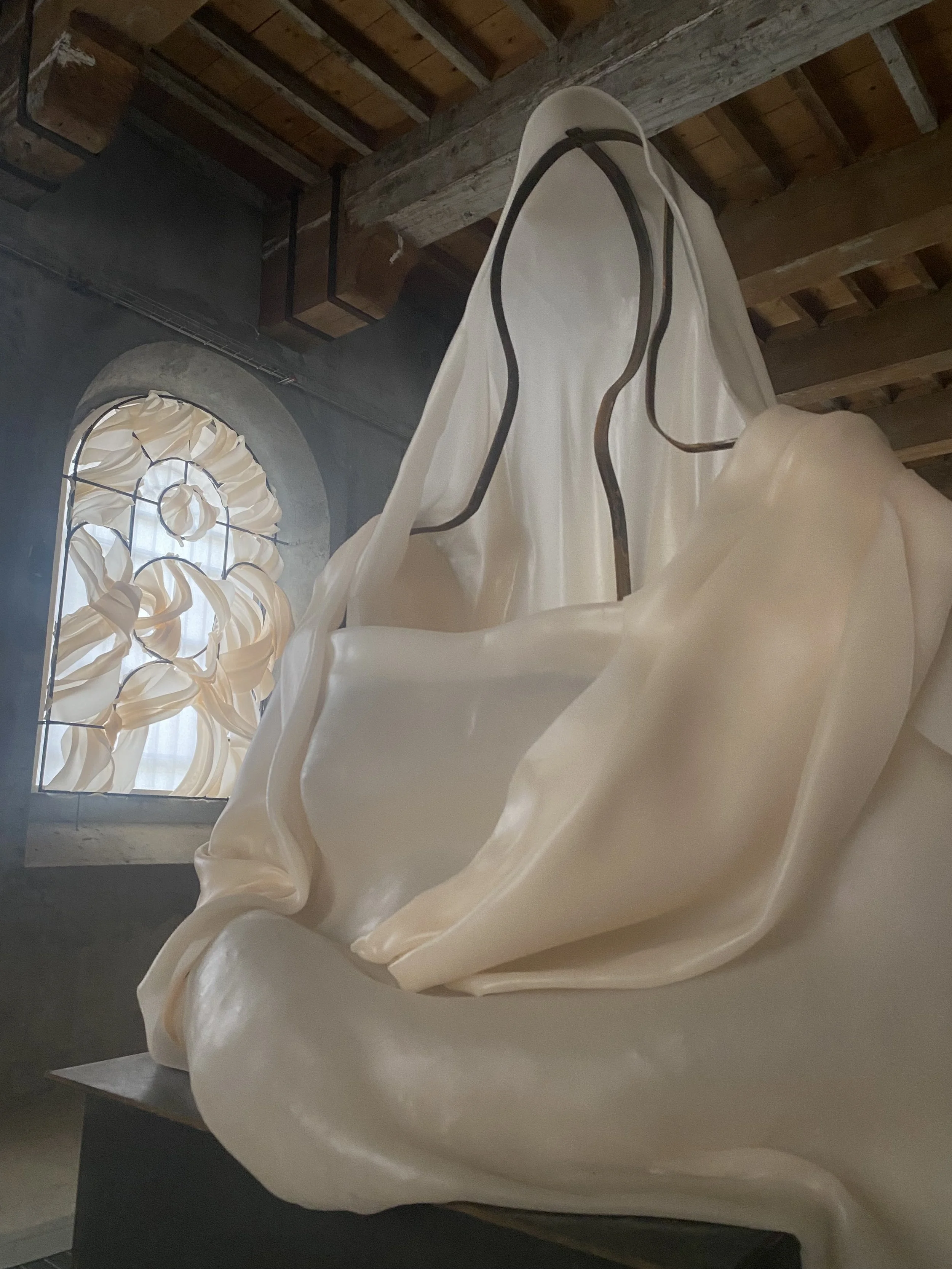
Breathe by Juliette Minchin at Rivelazioni at Museo S’ant Orsola, Florence, 2024
IN THIS ARTICLE:
Art chosen to avoid criticism will never feel fully settled.
Resolution is not playing it safe… it’s unity.
Full completion gives creative energy back to its owner.
Finished is about doing. Resolution is about being.
when a space feels “done” but not settled
By the end of a project, everyone is tired. Designers have made hundreds…if not thousands… of decisions.
Construction is wrapping up. Budgets are tight. Timelines are screaming.
And unfortunately, art arrives at the end…when the exhaustion and overwhelm causes a lot of second-guessing creeps in.
Is it too bold?
Is it not bold enough?
Will the client react well?
Will visitors understand it?
Will we need to explain this?
When energy is low, even strong choices feel risky. Art stops being about intention and starts being about avoiding criticism…but that’s when the sense of completion slips away.
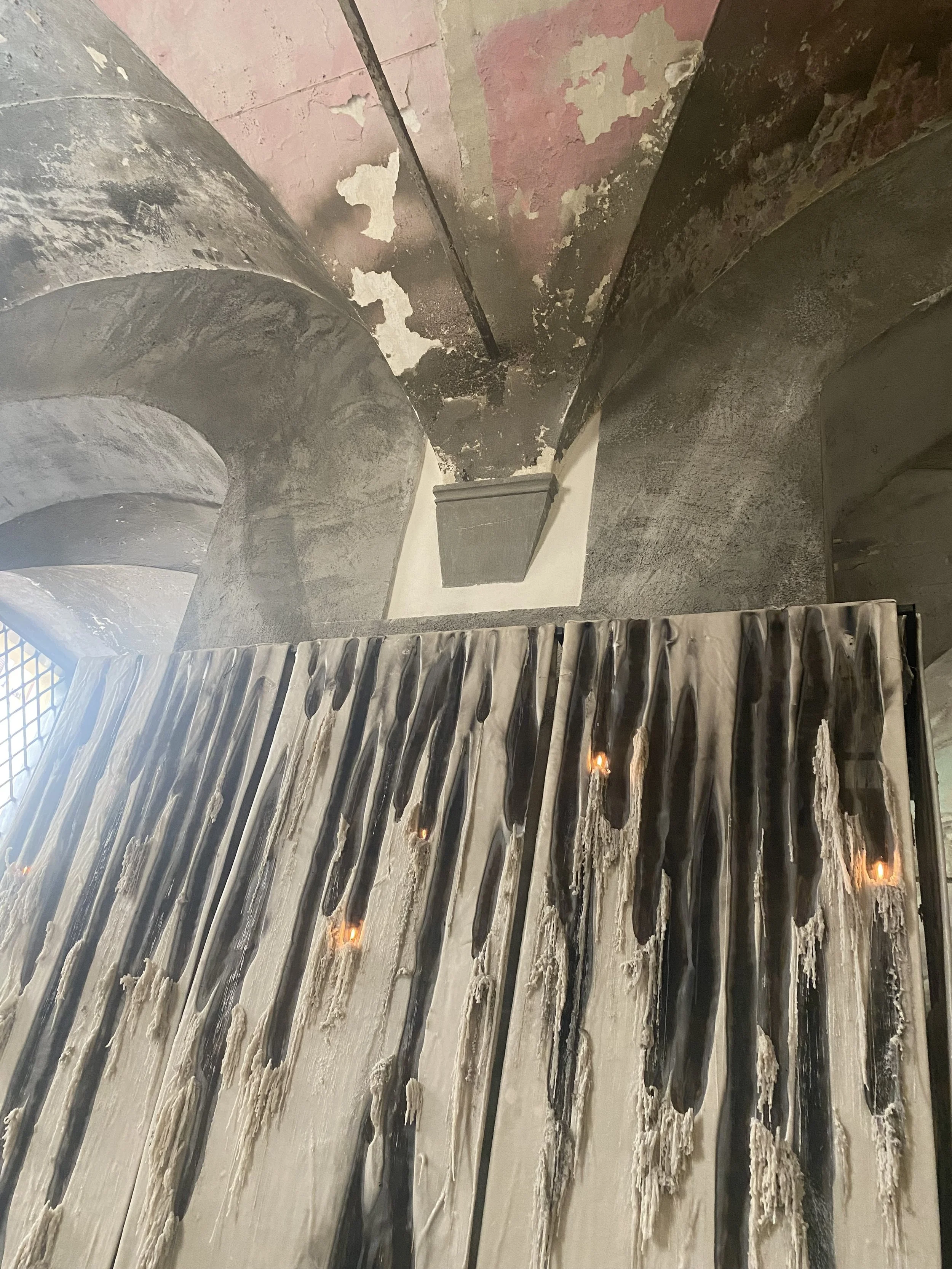
Vigil with Roots by Juliette Minchin at Rivelazioni at Museo S’ant Orsola, Florence, 2024
Is resolution the same as playing it safe?
True completion is not about matching tones so nothing stands out.
In fact, at Rivelazioni, the two artistic voices were completely different: Minchin’s work was loose, architectural, expansive - while Roberti’s drawings were intimate and fine-lined.
And yet, the exhibition didn’t feel confusing. The dialogue felt natural.
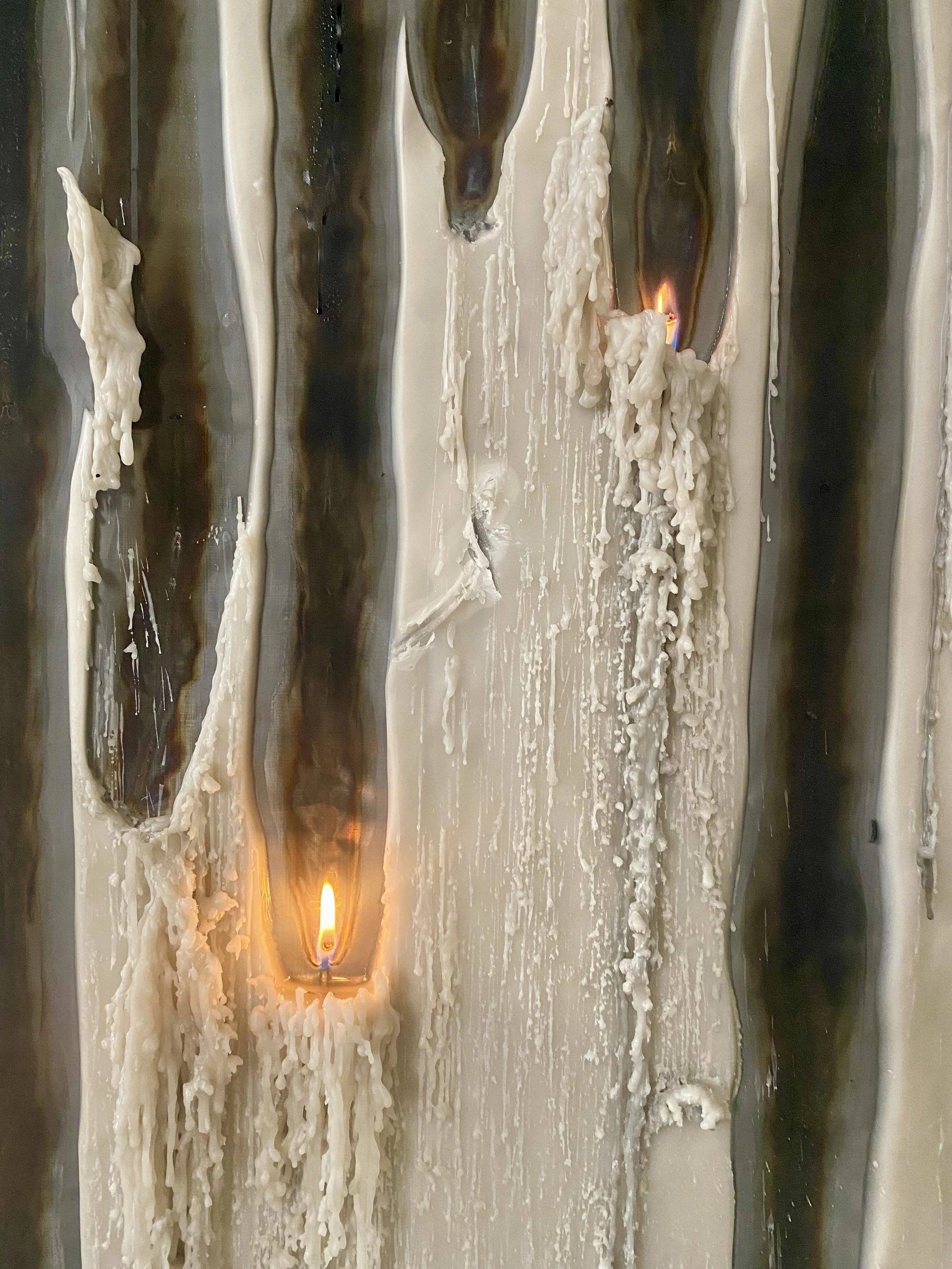
Vigil with Roots by Juliette Minchin at Rivelazioni at Museo S’ant Orsola, Florence, 2024
when a project won’t release you
Most of my clients are high-capacity creatives - architects, designers, developers - and they’re rarely working on just one project at a time. By the time one wraps up, they’re already moving on to the next. So, if a space doesn’t feel fully complete, it lingers in their nervous system. Decisions replay in their head, “what-ifs” keep popping up, and attention keeps looping back to unfinished choices ….instead of moving forward.
Resolution matters because it gives that energy back. When a space fully holds, clients can walk away and say:
“Okay. This feels right.”
“I don’t need to explain this.”
“Now I can stop thinking about it.”
That release is powerful.
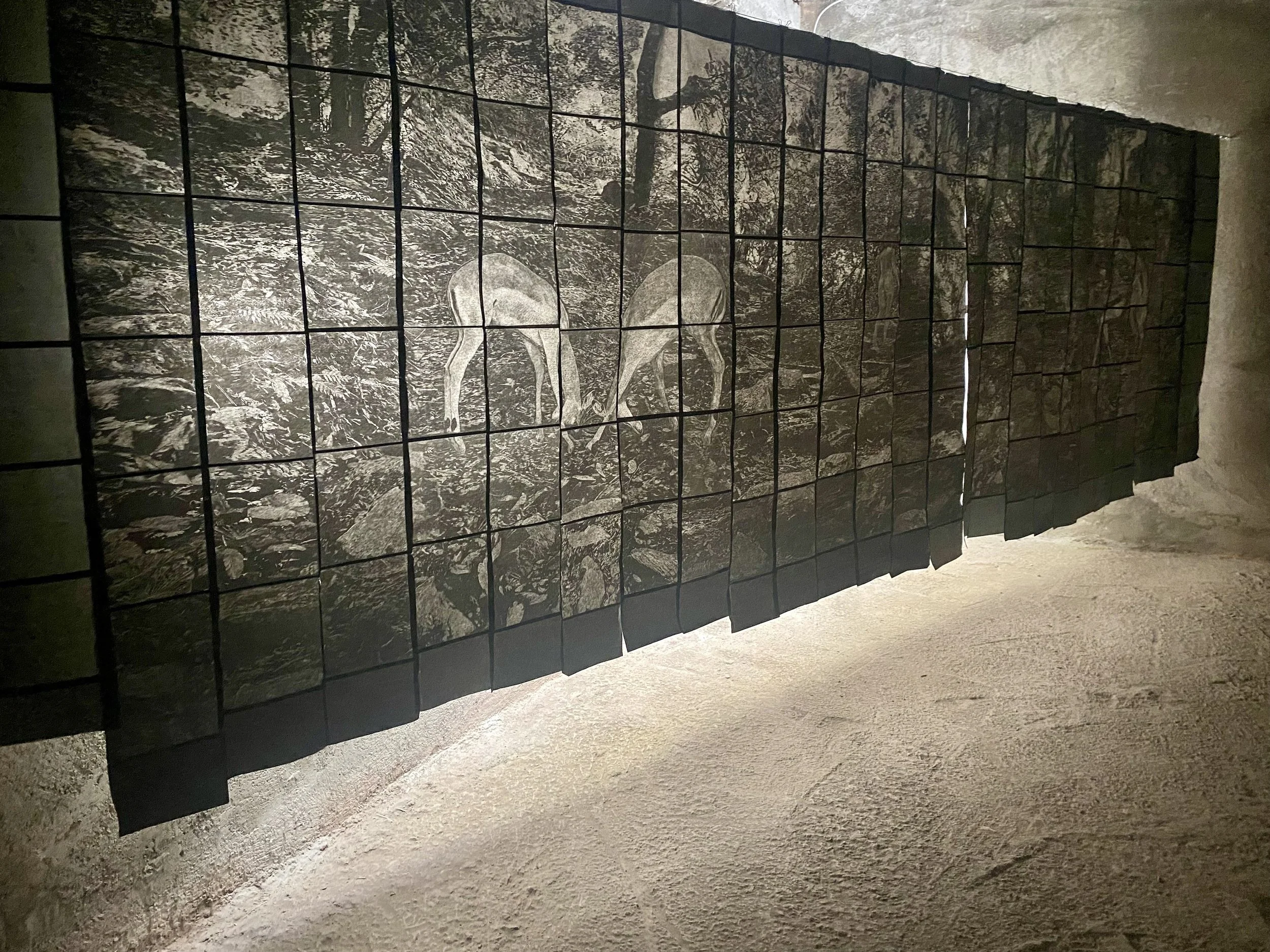
Details from the “Auras” series by Marta Roberti at Rivelazoni, Museo S’ant Orsola, 2024
what does resolution actually look like?
Resolution is when a space no longer asks questions of itself - not because it’s simple or even safe - but because everything inside the space is speaking the same language. You’re not defending the art or over-explaining the concept. It just… holds.
I’ve felt that before when I shaped the art package for OU Medical Center at my previous studio, where the architecture was designed around the layers of Gloss Mountain - and the artwork reflected that same formation. When it was installed, there was no long explanation needed. It simply belonged.
Finished is about logistics. Resolved is about emotion.
How to know when you’ve reached it?
At the end of a project, I often check in with the space itself:
Does it feel like it’s exhaling….or is it still negotiating?
If a piece were removed, would the room feel stronger…or incomplete?
At Rivelazioni, even in the raw, unfinished church, with contrasting materials and two very different artistic voices, it all came together.
The space breathed, and everything belonged.
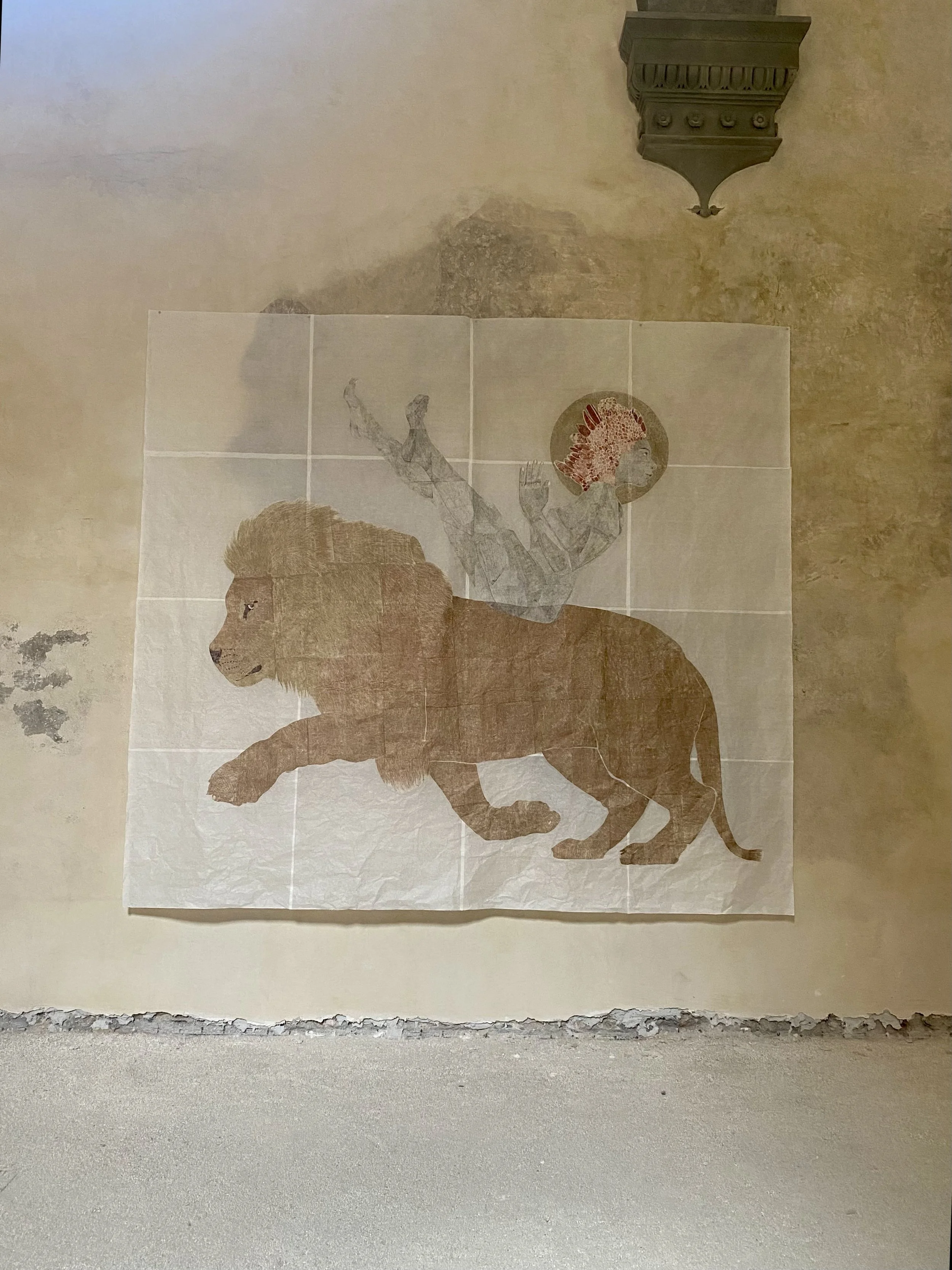
Details from the “Auras” series by Marta Roberti at Rivelazoni, Museo S’ant Orsola, 2024
your creative energy flowing again
When you finish a project, you can close the timeline.
When you resolve a project, you can close the loop.
For high-capacity creatives, this distinction matters - this clarity preserves creative energy for what’s coming next. Art plays a central role in that.
When chosen with intention and given the space to exist, art doesn’t raise more questions….it answers them.
So if you’re nearing the end of a project, ask yourself: Does this space feel finished, or does it feel whole?
Because when it’s resolved, you won’t need to explain it. You’ll just know.
And then - you can move forward.
Let me know in the comments what’s been most useful for you here.
Natalie Lytle
Contemporary Art Advisor / Artful Edit
View my bio